
Beyond the Spreadsheet: Why Your CRM is Failing the Human Test

Behavioral science for CRM is the practice of using psychological insights — drawn directly from customer behavior data — to make CRM systems respond to people as individuals, not just records.
If you’re trying to understand how this works in practice, here’s the short version:
Most CRM systems are built around transactions, not people. They track what customers did — clicked, bought, churned — but they rarely ask why.
That gap is expensive.
When your CRM can’t distinguish between a price-driven buyer and a quality-driven one, every message you send is a guess. And in 2026, customers feel the difference between a brand that understands them and one that’s just running them through a sequence.
The problem isn’t your data. You likely have plenty of it. The problem is that most CRM setups treat behavioral signals as operational inputs — things to route and automate — rather than as psychological clues about what a person actually needs to feel certain enough to act.
Research from a study of 7,188 customers at a German fashion retailer confirmed what many marketers suspect but rarely act on: machine learning models trained on multichannel retail data can predict meaningful psychological traits with moderate to high accuracy. That’s not a future capability. It’s available now, to any business willing to look at their data differently.
This guide walks you through how to do exactly that.
I’m Jeremy Wayne Howell, founder of The Way How, a psychology-first marketing and revenue strategy firm — and for over 20 years I’ve helped founders and revenue leaders close the gap between their CRM data and the human behavior driving it, which is the core of what behavioral science for CRM is built to solve. If your tactics are working on paper but revenue isn’t moving, what follows will help you diagnose why.
The Science Behind Behavioral CRM
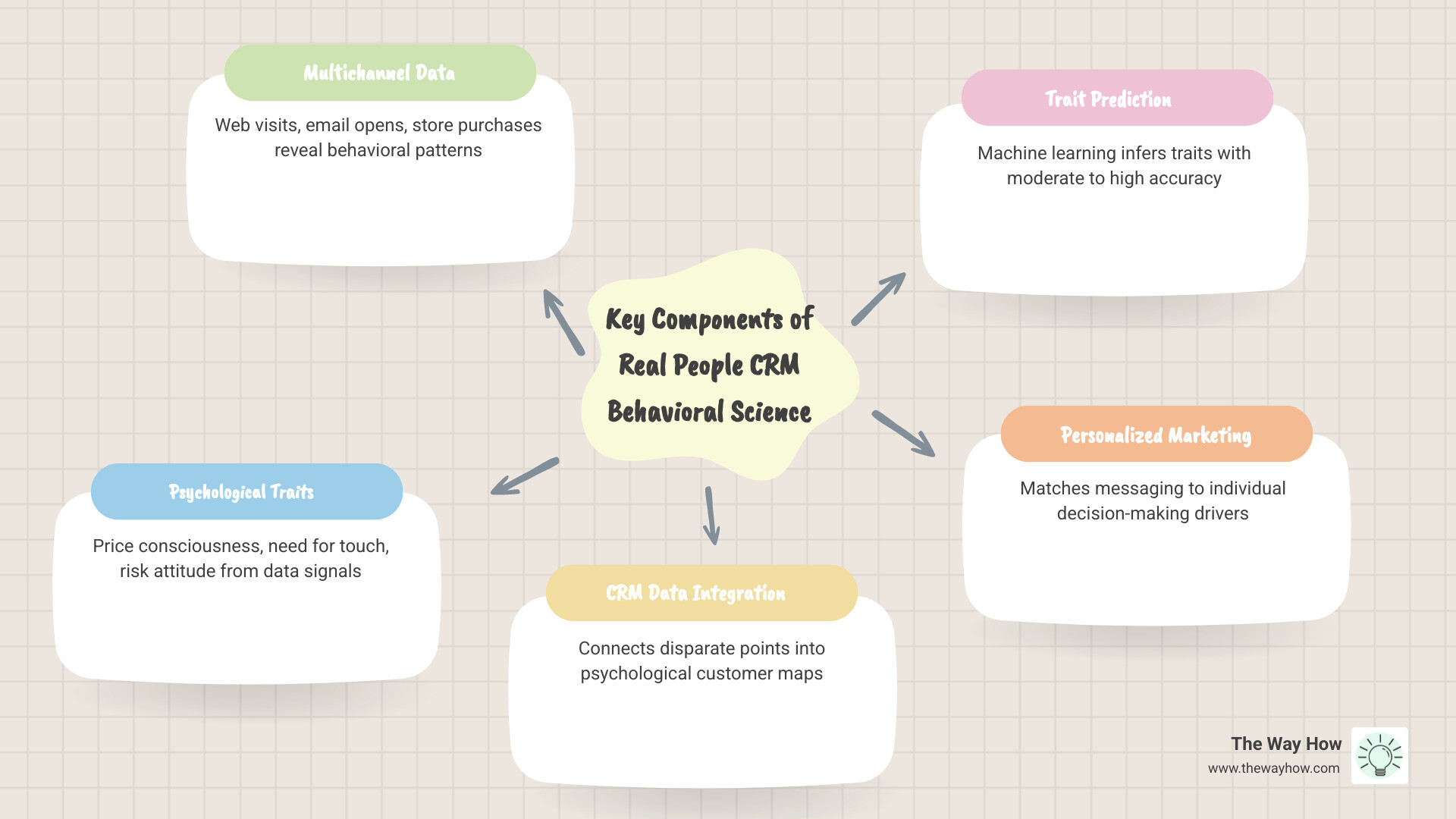
To make a CRM “human,” we have to stop looking at customers as rows in a database and start seeing them as individuals with distinct psychological profiles. This is where Behavioral Science in CRM moves from theory to revenue. By analyzing multichannel data—the breadcrumbs left behind during web visits, email opens, and store purchases—we can infer traits like price consciousness, the “need for touch” (how much someone needs to physically interact with a product), and general risk attitude.
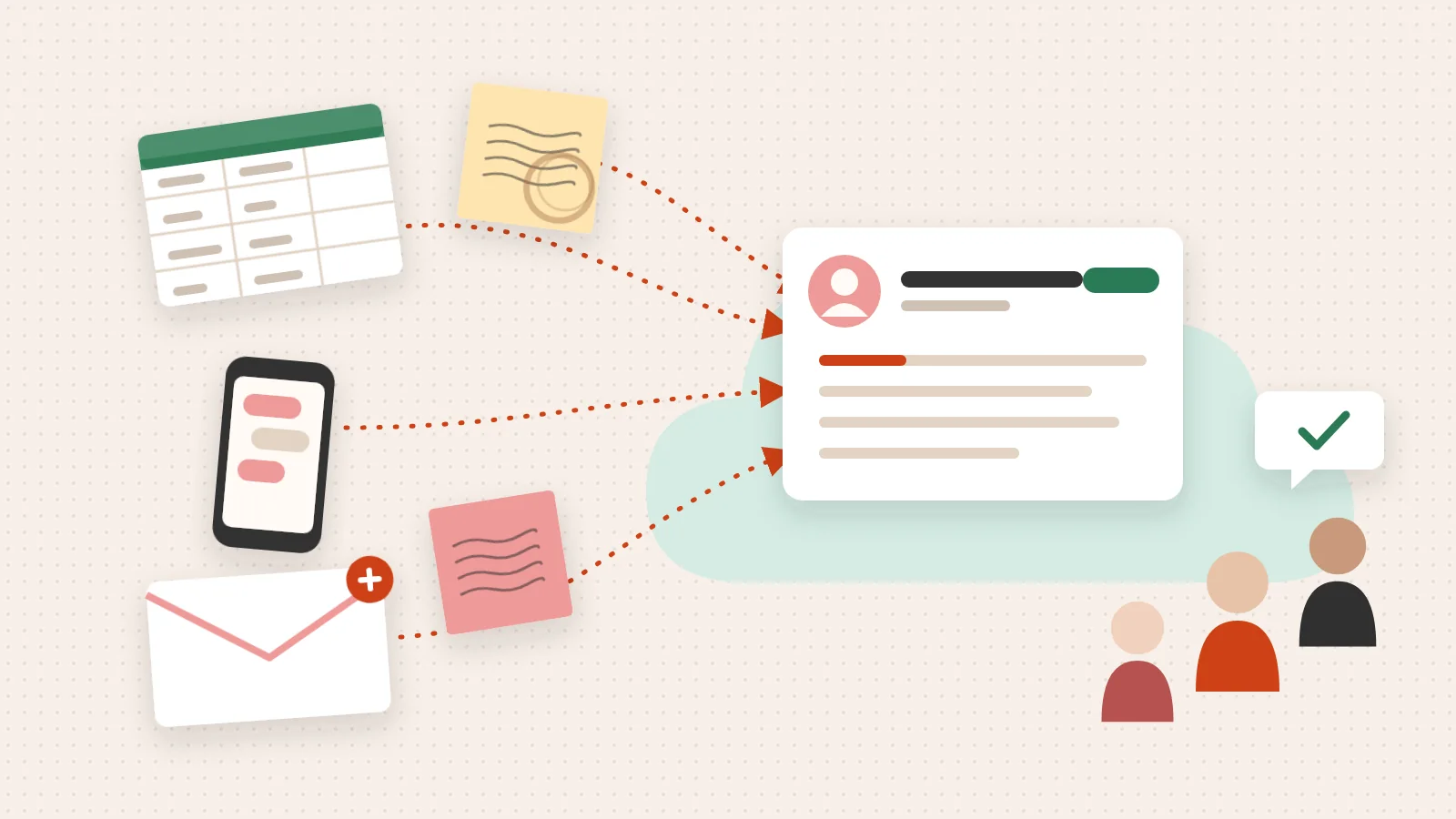
The magic happens during CRM data integration. When we connect disparate data points, we aren’t just cleaning a list; we are building a psychological map. Instead of knowing that “Customer A bought a blue shirt,” we begin to understand that “Customer A values sensory experience and is likely to respond to high-quality fabric descriptions.”
Predicting Traits with Behavioral CRM
How do we actually “see” a personality through a screen? Through machine learning. In 2026, the gold standard for this was established by a landmark study involving 7,188 customers of a German fashion retailer. Researchers combined traditional online survey assessments with the retailer’s actual CRM data.
The results were a game-changer for CRM development. By training machine learning models on this combined dataset, the researchers proved that we can predict psychological traits with moderate to high accuracy. We no longer need to ask customers 50 questions about their personality; their behavior in the CRM tells the story for them.
Why Retail Data Wins in Behavioral CRM
You might think banking data—which shows every cent spent—would be the ultimate predictor of behavior. Surprisingly, retail multichannel data is far superior. While a bank statement shows where money went, retail CRM data shows how a person chose.
Retail data captures purchase frequency, return patterns, and engagement across web, mobile, and physical stores. These multichannel touchpoints reveal domain-specific traits that banking data misses. For example, a customer who frequently visits a physical store before buying online has a high “need for touch.” This level of nuance is why CRM consulting services are shifting focus toward capturing experiential data rather than just financial totals.
Moving from Industry Labels to Behavioral Personas
For years, B2B companies have relied on “Industry” as their primary way to segment customers. “We sell to Solar Energy companies,” they might say. But as we’ve seen in recent UX research, industry labels are often a distraction.
Imagine a CRM company targeting solar firms. They might fail because they didn’t realize that field-based sales teams in that industry have a desperate need for a high-functioning mobile app, while the office-based teams don’t care about it. The “industry” was the same, but the behavior was different.
By using a North Star metric (N*) to identify your most successful users and conducting in-depth interviews, we can move toward human-centered marketing. This allows us to create behavioral personas that reflect how people actually work and make decisions. This is the “ultimate guide” level of content marketing psychology—writing for a person’s mindset, not their SIC code.

The 10 Traits of High-Value Customers
When we look at the data of “Real People,” we find that high-value customers usually share a specific “sales process mindset.” They aren’t just defined by their budget, but by how they handle opportunity volume and team collaboration. Understanding these traits is the foundation of the psychology of marketing. High-N* customers typically exhibit:
- A structured belief in their own sales process.
- A specific team size that requires collaboration tools.
- A high volume of incoming opportunities.
- A proactive approach to CRM usage. …and six other markers that signal they are ready to grow.
Applying Behavioral Frameworks to the Customer Journey
Once you have the data, how do you change behavior? We look to frameworks like the Fogg Behavior Model. This model suggests that for a behavior to occur, three things must happen at once: a Prompt, the Ability to do the task, and the Motivation to do it.
If a customer isn’t upgrading their subscription, is it because they aren’t motivated? Or is it because the “Ability” is blocked by a confusing user interface? Understanding these 50 psychology secrets helps us diagnose why a customer has stalled. We can then use emotional marketing tactics to bridge the gap.
Nudging Toward Loyalty
We can also use “nudges” based on cognitive biases to keep customers engaged.
- Loss aversion marketing: Reminding a customer what they will lose if they don’t act (e.g., “Don’t lose your 20% discount”).
- Endowment effect marketing: Giving customers a “trial” or a “sneak peek” so they feel a sense of ownership over the product.
- Anchoring bias marketing: Presenting a premium option first so that the standard option feels like a “steal.”
Building a Trust-First Prediction Pipeline
Moving to a behavioral CRM isn’t just about better math; it’s about a better philosophy. Here is how traditional CRM stacks up against a behavioral approach:
| Feature | Traditional CRM | Behavioral CRM |
|---|---|---|
| Primary Data | Transactions | Psychological Traits |
| Segmentation | Demographics/Industry | Behavioral Personas |
| Goal | Persuasion | Trust & Alignment |
| AI Usage | Black-box Automation | Explainable Character Alignment |
Setting up this pipeline requires CRM software developers who understand neuromarketing techniques. However, we must address the ethics. Profiling people’s psychological vulnerabilities can quickly turn into manipulation. To maintain trust, businesses must be transparent about how data is used and ensure the goal is to help the customer find the right solution, not just to “close” them.
The Future of Emotionally Intelligent Automation
The next evolution of behavioral science for CRM is the REAL Framework. This approach focuses on “character strengths”—stable, cross-cultural traits like leadership, curiosity, or persistence. Research shows that CEOs who lead with these strengths see a 5x increase in return on assets.
In the CRM world, this means creating AI agents—like those offered by RealTech CRM—that don’t just follow up, but follow up with emotional intelligence. These systems aim to be human-compatible and sustainable. It’s the human psychology marketing ultimate guide in action: using AI to scale empathy, not just volume.
Ogilvy Insights and the Nudgestock Effect
Industry leaders like Ogilvy have long championed this “human-first” approach through events like Nudgestock. Their research into “synthetic audiences” allows brands to simulate customer reactions in real-time, ensuring that a marketing framing effect is helpful rather than jarring. For those building these systems, our CRM for web developers guide offers a technical roadmap for integrating these psychological layers.
Frequently Asked Questions about Behavioral CRM
Can machine learning accurately predict psychological traits from CRM data?
Yes, research from 2026 indicates that machine learning models can predict traits like price consciousness and need for touch with moderate to high accuracy using multichannel retail data. By analyzing how often someone returns items or how they respond to discounts, we can build a highly accurate psychological profile.
Why is retail data better than banking data for psychological profiling?
Retail data provides more domain-specific insights into consumer preferences and sensory needs, whereas banking data is often too abstracted. A bank sees a $100 charge at a clothing store; a retail CRM sees that the customer spent 20 minutes in the fitting room and only bought items made of organic cotton. That “need for touch” and value-alignment is only visible in the retail data.
What are the ethical risks of using behavioral science in CRM?
The primary risks include privacy infringement and manipulative targeting. If a company knows a customer is “risk-averse” or “highly impulsive,” they could theoretically exploit those traits. Businesses must prioritize transparency and use frameworks like REAL to ensure AI systems remain human-compatible and trustworthy.
Restoring Momentum Through Human Clarity
At The Way How, we believe that the “certainty gap” is the biggest killer of growth. When your customers are uncertain, they don’t buy. When your team is uncertain about who your customers are, they can’t sell.
By integrating behavioral science for CRM, you remove that uncertainty. You stop guessing and start diagnosing. You move from chasing tactics to building a dependable growth engine rooted in human behavior and strategic clarity.

If you’re ready to stop looking at spreadsheets and start looking at the real people behind them, we can help. More info about our services is available for those ready to lead with empathy and precision.